HSBC's MDs think the new strategy is crazy: "They could have spun us out"
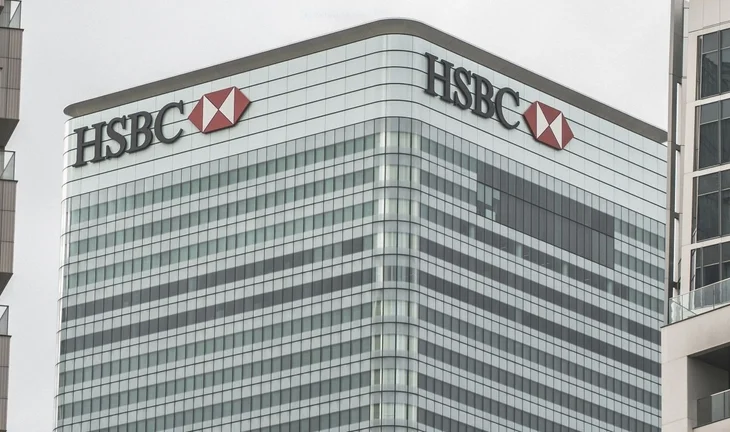
HSBC is closing its M&A and equity capital markets (ECM) businesses in EMEA and the US, and senior people in those teams are not pleased. They are not pleased at all. In the words of one managing director, it's an act of "obvious self harm." In the words of another, it's "appalling."
Get Morning Coffee ☕ in your inbox. Sign up here.
HSBC has spent billions building out its investment bank, and in equity capital markets at least, insiders say it was starting to bear fruit. The bank ranked 11th for European ECM last year, up from 16th in 2023. It's been graining ground under the leadership of Edward Sankey, the London-based global head of ECM who was hired from Deutsche Bank in 2019. "Sankey is one of the best ECM bankers in the world," says one admiring member of his team. "Yes, we had a few tough years, but ECM is coming back with a vengeance and these are huge fees."
While Sankey is popular internally, the same cannot always be said for Kamal Jabre, the global head of M&A who was hired from Morgan Stanley in 2018. Jabre is rumoured to be staying with the bank, possibly to run M&A in the Middle East. Disgruntled London bankers say he's too far from clients and didn't do enough to save them. "It's shocking," says one M&A MD at HSBC in London. "We've been running a successful and profitable business, and it's incredible that the senior leadership didn't even consider a spin out or an MBO."
When it announced the winding down of ECM and M&A, HSBC said it would continue to execute deals already in its pipeline. However, insiders says those deals are fast disappearing. Bloomberg confirmed last week that the bank lost its role advising on the €1.5bn Stada IPO as a result of the closures, but insiders say this understates the reality. "We're having to hand back multiple IPO and M&A mandates which are not in live execution," says one. "- We're giving up huge amounts of revenue." Another says the execution of the wind down strategy has itself been "poor". - "We've been chasing ambulances," he adds. "There was no proper communication to clients before the strategy was announced."
Although it's closing UK, European and US ECM and M&A, HSBC plans to maintain its debt capital markets (DCM) business alongside equities and fixed income sales and trading. This makes no sense, argues another London MD. "It's mad," he says. "You're keeping the trading desks and the lending business, both of which chew up capital, and you're getting rid of the low cost M&A and ECM functions that offer high returns." UK ECM has made $150m+ in five years with a small team, he adds. "At some point, they will turn around and think they'd quite like that back."
HSBC's London ECM bankers say the strategy change looks all the more illogical in light of HSBC's 2023 acquisition of Silicon Valley Bank UK. At the time, the bank reportedly planned to use SVB UK's pipeline of entrepreneurs as clients for ECM business. Not any more.
"It's an upside down strategy," says another managing director. "You create a scalable platform with M&A and ECM. DCM and lending are not scalable. Everyone in the broader ecosystem is shocked by this."
While M&A and ECM are being wound down in Europe and the US, the intention is to maintain a full service investment bank in Asia and the Middle East. HSBC's MDs are casting aspersions on this too. "The Middle East business is tiny," says one MD, "And let's be honest, Asia doesn't make much money either."
"It's nonsensical," says another senior figure from the bank. "All the clients are multinationals and they need multi-country solutions. The cash and payments businesses are global. You can't have a Barclays Capital strategy when you're HSBC."
Bloomberg reported today that HSBC is already cutting jobs, including in Asia, which is unaffected by the business closures. More cuts will follow next week and there will be greater clarity when the bank reports its results on Monday. People at HSBC told us previously that the bank has made three lists of people: those who are staying, those who are going immediately; those who will go after a delay.
If it's about cost-cutting, London banking MDs say there are other options. HSBC is a global bank which had $24bn of operating expenses in the first nine months of 2024, of which only $5.7bn came from the global banking and markets division (the investment bank). "There's a lot of fat in the organization, and it's not in the investment bank," says another MD. "The investment bank was the growth opportunity," he claims.
Why has HSBC opted for this strategy? Insiders blame CEO Georges Elhedery, who is a fixed income trader. They blame head of the corporate and institutional bank Michael Roberts, who's a "commercial guy". They blame Ping An Asset Management, which owns 8% of HSBC shares and has a history of campaigning for the bank to spin off its Asian arm. And they blame consulting firms like McKinsey & Co.: "This has been done by some 23-year-old McKinsey guy who doesn't understand the business."
Once the axe has fallen, some HSBC MDs may opt for a quieter life. Others are already plotting their comeback. "It would be viable for us to group together in a new entity," says one. "It's peculiar that HSBC hasn't even tried to get liquidation value for this business. We have good people and have been doing some good things for clients."
Have a confidential story, tip, or comment you’d like to share? Contact: +44 7537 182250 (SMS, WhatsApp or voicemail). Telegram: @SarahButcher. Click here to fill in our anonymous form, or email editortips@efinancialcareers.com. Signal also available.
Bear with us if you leave a comment at the bottom of this article: all our comments are moderated by human beings. Sometimes these humans might be asleep, or away from their desks, so it may take a while for your comment to appear. Eventually it will – unless it’s offensive or libellous (in which case it won’t.)